


Situating Bodoland: An Ecological, Cultural and Urbanization Profile
This is the first blog in a series that explores Bodoland through multiple lenses, including governance, economy, quality of life, ecology and culture. Drawing on field insights, stakeholder engagements and ongoing research, the series explores Bodoland’s potential to become a thriving eco city-region.
Nestled in the Himalayan foothills, Bodoland — an autonomous region in Assam — oversees the convergence of rivers, forests and cultures. The region is administered by the Bodoland Territorial Council and comprises the five districts of Kokrajhar, Chirang, Baksa, Tamulpur and Udalguri, covering about 9,400 sq. km. With rich ecological endowments and a vibrant cultural mosaic, Bodoland stands at a pivotal juncture where its development choices will determine whether its natural and cultural wealth becomes a springboard for sustainable prosperity or is eroded by unplanned growth.
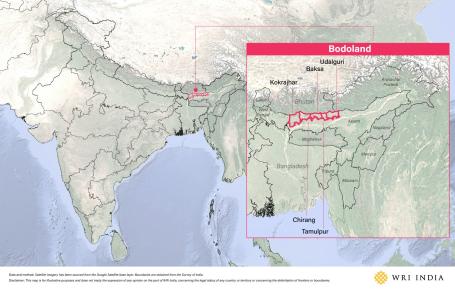
Geographical, Ecological and Economic Setting
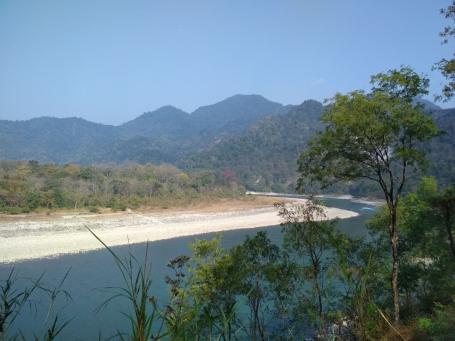
Bodoland lies on the alluvial plains of the Brahmaputra valley, stretching up to the forest-rich foothills adjoining Bhutan. Roughly one third of the area is covered by forests, plantations, national parks and wildlife sanctuaries. The movement for the community-led restoration of Manas National Park, a UNESCO World Heritage Site, and a tiger, elephant and biosphere reserve, reflects the region’s ecological commitment and significance.
At the same time, its low-lying floodplains, riverine systems and dispersed settlements make the region vulnerable to seasonal flooding, erosion and infrastructure challenges. Rivers such as the Manas, Aie and Beki support agriculture, fisheries and rural livelihoods.
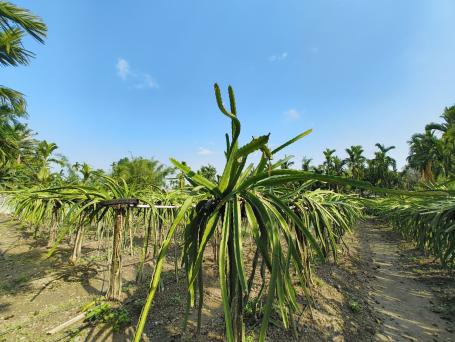
The region is home to 26 communities, including the Bodo people— one of Assam’s largest Indigenous groups — along with Koch Rajbongshi, Rabha, Nepali and Adivasi communities. Twenty-two Geographical Indication (GI) tags have been granted to traditional artefacts, dresses, foods and cultural products of the Bodo community. Agriculture and sericulture remain central to the economy, while newer crops such as bananas, betel nuts, dragon fruit, cocoa, vanilla and small tea plantations are diversifying livelihoods. Sericulture and handloom weaving help link heritage with economic opportunity, particularly for women in the region.
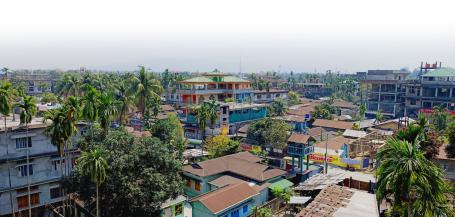
With only 4-5% of the population living in urban areas, much of the rural population heavily relies on natural resources. Low urbanization constrains the revenue base and limits economic diversification. The interplay of ecological fragility and economic aspiration is shaping a growing conversation on sustainable growth in the region.
Political Structure and Governance System
The Bodoland Territorial Council, constituted under the Sixth Schedule of the Constitution, exercises legislative, administrative and financial powers in the region. Bodoland’s autonomous status is the result of decades of mass mobilization toward protecting the land, resources, culture and self-governance of tribal communities. In recent years, the council has focused on strengthening administrative systems, improving service delivery, expanding livelihood opportunities and identifying infrastructure opportunities.
Managing a resource-rich, climate-sensitive region requires integrated planning that balances economic ambitions with ecological stewardship and social inclusion. As connectivity to Bodoland improves through railways, roads and airways, and investments in physical and social infrastructure rise, governance will play a critical role in shaping the trajectory of regional development.
Climate Vulnerability and Current Challenges
Bodoland’s natural systems are under visible stress. Changing rainfall patterns, shrinking forest patches and increasing growth pressures, particularly around towns such as Kokrajhar and Udalguri, point to emerging risks. In July 2025, parts of Kokrajhar and Baksa saw drought-like conditions due to prolonged dry spells. Weeks later, torrential rains led to flash floods that inundated farmlands and settlements. The same rivers that sustain life often overflow during monsoons, turning abundance into adversity.
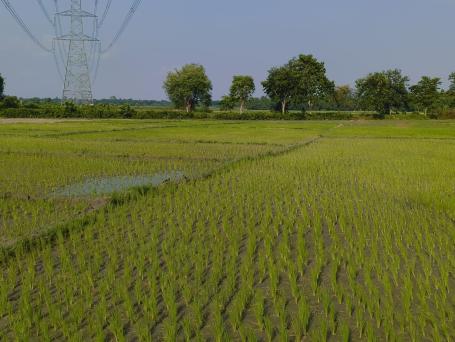
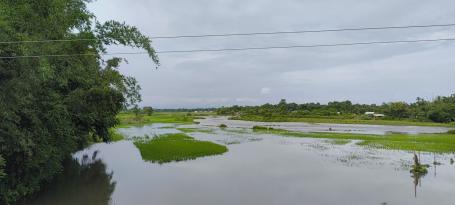
Deforestation, soil erosion and heavy dependence on climate-sensitive sectors like agriculture heighten vulnerability. Many rural households rely on fragile ecosystems for livelihoods, yet these ecosystems are experiencing high climate variability, driven by recurring floods and frequent dry spells. These realities make climate resilience central to Bodoland’s development conversation.
Read more about Regional Planning for Climate Vulnerable Geographies
Why does Kashmir Valley need a regional spatial strategy? Read this blog to find out.
Toward an Ecologically Grounded Strategy for Bodoland’s Growth
Bodoland stands at a defining point in its growth journey. Its demographic dividend, history of collective action and emerging leadership in local governance offer a foundation for transformative change. Yet this potential must be aligned with strategies that reflect the region’s unique geography, plural identity and ecological fragility.
Without an ecologically sensitive approach, climate variability, resource degradation and unplanned growth could undermine gains in connectivity, infrastructure and rural development. A reimagined strategy must draw on the specific contexts of forest villages near Bhutan, the floodplains of the Aie and Beki, the tea belts of Udalguri, and sericulture clusters in Kokrajhar and Chirang. These spaces show how local knowledge, community institutions and ecological stewardship can guide development choices for the region.
Toward a Place-based Development for Bodoland
WRI India’s ongoing engagement under the Thriving Eco City Region initiative aims to work with local stakeholders, government departments and community groups to understand the links between ecology, economy, equity and governance in Bodoland. The initiative adopts a place-based approach to development that recognizes the unique social, ecological, economic and institutional characteristics of a specific place. Such an approach focuses on designing integrated, context-sensitive strategies that move beyond one-size-fits-all solutions to advance inclusive, sustainable and resilient development for all.